Hamnet is a great movie, let’s start with that, but the truth is that I could never distance myself enough from Maggie O’Farrell’s sublime novel to truly appreciate it.
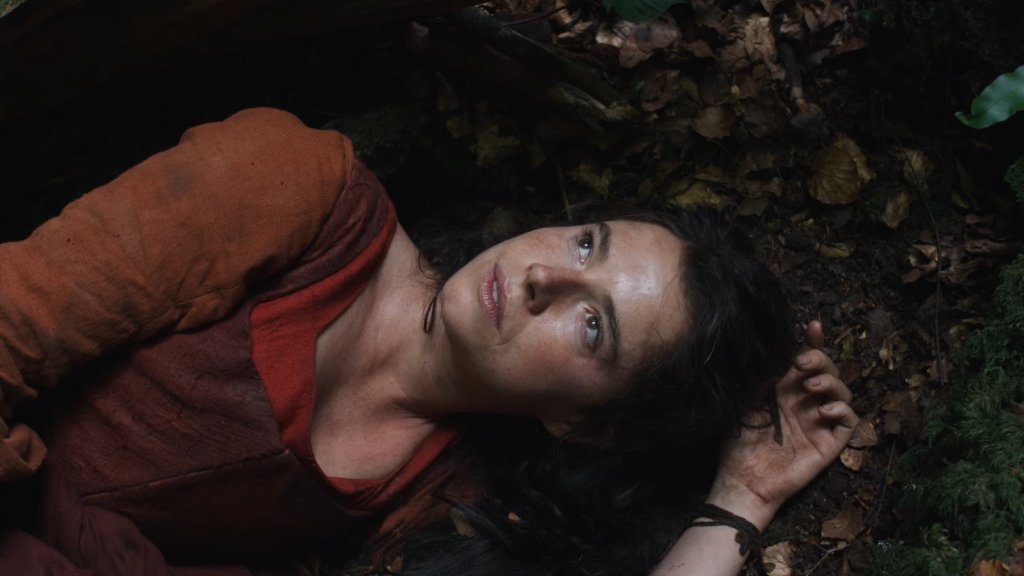
As a certified fan of Chloé Zhao (her best and second feature, The Rider, was the first review I ever wrote on this blog back in 2018) I can attest that most of her trademarks are there. Her emotional sensibility permeates every scene, in the way she makes all her characters seemed lived in, like we are only ever seeing them in one moment of their storied lives. She is a master in the use of natural light: in an age where studios and streamers seem deathly afraid of letting a single shadow mar the face of an actor, Zhao lets shadows bathe entire scenes, bringing us closer to the actors without moving the camera. One of her signatures used to be to work with nonprofessional actors and coax incredible performances out of all of them; obviously that is not the case here, although as long as we’re using pros it’s just as well that we got Jessie Buckley giving a soul-rending performance from beginning to end. Still, Zhao’s penchant for a naturalistic style is in full display: she uses long takes in which the actors often trip over their words or hesitate with their lines, she lets them move around the space, she mostly abandons the use of a score in favor of a rich soundscape -think of the cold wind that rushes out of an underground cave.
And yet, despite all of the above, I couldn’t shake a tinge of disappointment in the deep, nuanced themes of the book that couldn’t quite make it onto the screen. While the plot and the character beats are all there, one of the things that fascinated me about the book was the way O’Farrell positioned the protagonist of Agnes as the heir of the Celtic culture, perhaps even druidism, in direct opposition to her adoptive family’s and Shakespeare’s Christianism. To Zhao’s credit, the hints are there: for the first half of the movie Agnes is shown almost exclusively in the forest, one with nature; she is the only one who wears red in a world where everyone else wears blue and gray (only her brother, Bartholomew, wears brown, placing him in the middle of both worlds), but for the second half Agnes seems to accept domesticity. Another aspect that may not work in the film’s favor is the expanded role of William Shakespeare; Paul Mescal is predictably excellent in the role and the final sequence is beautiful, but I am not convinced that the story needed a view into his psyche: in the book his absence, the unknowable nature of his thoughts, seemed a critical conflict for Agnes.
This seems like a lot of criticism for a fine film by a genius director; I wonder, if you haven’t read the book, will you be blown away or not get the hype? I thoroughly enjoyed it, I cried multiple times, but as an adaptation it didn’t reach quite deep enough for me.
Hamnet (2026)
Dejemos claro desde el principio que Hamnet es una gran película, pero lo cierto es que no soy capaz de distanciarme lo suficiente de la magistral novela de Maggie O’Farrell para disfrutarla de verdad.
Como fan oficial de Chloe Zhao (su segundo y mejor largometraje, The Rider, fue la primera reseña que escribí en este blog allá por 2018) doy fe de que Hamnet exhibe casi todas sus características. Su sensibilidad emocional impregna cada escena, por ejemplo en cómo todos los personajes se ven vivos, como si nos los encontráramos en un mero capítulo de sus complicadas vidas. Es una experta en el uso de la luz natural: en usta época en la que los estudios y los streamers le tienen pánico a que la más mínima sombra mancille el rostro de un actor, Zhao deja que las sombras bañen escenas enteras, acercándonos así a las caras de los actores sin mover la cámara. Una de las claves del cine de Zhao era la participación de actores no profesionales; evidentemente ese ya no es el caso, aunque puestos a emplear profesionales no está mal contratar a Jessie Buckley para que dé un recital de actuación como este. Aun así, el talento de la directora para el naturalismo sigue intacto: utiliza largas tomas en las que los actores tartamudean o incluso dudan al recitar sus frases, les deja moverse por el escenario, y en gran medida rehúsa la música a favor de complejos sonidos de fondo, como el viento sibilante que surge de una cueva subterránea.
A pesar de todo lo anterior, no pude evitar la decepción al constatar algunos de los temas del libro que se quedaron por el camino en la adaptación a la pantalla. Aunque el argumento y los personajes están completos, una de las cosas que más me fascinaron de la novela fue cómo O’Farrell posiciona a Agnes como heredera de la cultura celta, qizás incluso del druidismo, en oposición frontal al cristianismo de su familia adoptiva y de los Shakespeare. Reconozco que los indicios están ahí para quienes los quieran ver: durante la primera mitad Agnes siempre se nos muestra en el bosque, en comunión con la naturaleza; es la única que viste de rojo en un mundo en el que todos visten de azul y gris (solo su hermano, Bartholomew, lleva ropa marrón, posicionándose a medio camino entre un mundo y el otro), pero ya en la segunda mitad Agnes parece someterse a la vida doméstica. Otro aspecto que a lo mejor no juega a favor de la película es el mayor papel de William Shakespeare: Paul Mescal borda el papel, como era de esperar, y la secuencia final es impresionante, pero no estoy convencido de que a la historia le hiciera falta la su perspectiva. En el libro, su ausencia y el misterio de sus pensamientos son un conflicto crucial para Agnes.
Quizás sean demasiadas críticas para un buen filme de una directora visionaria. Si no has leído el libro, me pregunto si te cautivará o si pensarás que no es para tanto. A mí me ha gustado, lloré varias veces, pero como adaptación no acaba de hacer justicia al original.
 The Film Tower