
Kokuho, which means “national treasure” in Japanese, was Japan’s submission to this year’s Oscars and a massive critic and box office success in its home country that proceeded to be largely ignored by most Western countries and the Academy (to the point where it hasn’t even been picked up for release in Spain). I guess I understand some people might not be thrilled at the concept of a three-hour, decades-spanning historical epic about the inner workings of the world of kabuki theater; I can’t relate, this is so much my jam that I’ve been anxiously awaiting it since it was announced to premiere at Cannes.
You would know that it was based on a book even if I didn’t tell you, because it’s the kind of sprawling generational story that gets told over the course of eight hundred pages. It is the life story of Kikuo (Ryo Yoshizawa), the son of a yakuza mob boss who becomes the star student of a prestigious kabuki actor (Ken Watanabe) overshadowing the latter’s son and heir (Ryusei Yokohama). In a shorter story this might be enough of a formula to draw all the next steps, but over the course of their eventful lives there are enough shades of gray and ups and downs to explore the nuances of multiple themes.
I especially liked the relationship between the two stepbrothers (for lack of a better word): where a typical confrontation borne out of rivalry and jealousy would have been the path of least resistance, the movie takes the time to build between the two the solid camaraderie of two young men who have lived through a grueling training together. This doesn’t mean that there’s no conflict between the actor who has talent but no pedigree and the one who has pedigree but not so much talent, but rather that the conflict has a fraternal bond to interact with.
Ryo Yoshizawa pulls off a great and honestly exhausting performance: there’s dancing under heavy costumes, singing while carrying props, working the traditional expressions of kabuki actors under the thick white makeup of the female characters they play… But I was captivated by the supporting actors, obviously Watanabe with his usual gravitas, but also Soya Kurokawa, who would be a groundbreaking discovery at his mere sixteen years of age if we hadn’t already seen him give a brilliant performance as a child in Koreeda’s enlightening Monster, and especially Ryusei Yokohama, who sidesteps all the cliches the heir apparent could have fallen into with a deep-seated melancholy, while donning the same costumes and doing the same dances as the protagonist.
As much as I liked it, I won’t pretend it’s an easy three hours: towards the end there are two or three chapters that mostly serve to reiterate themes that had already been covered, and while the kabuki performances are a feast for the eyes, sometimes the ritualistic dialogue is painfully slow. For me, though, the cultural and emotional journey was worth it.
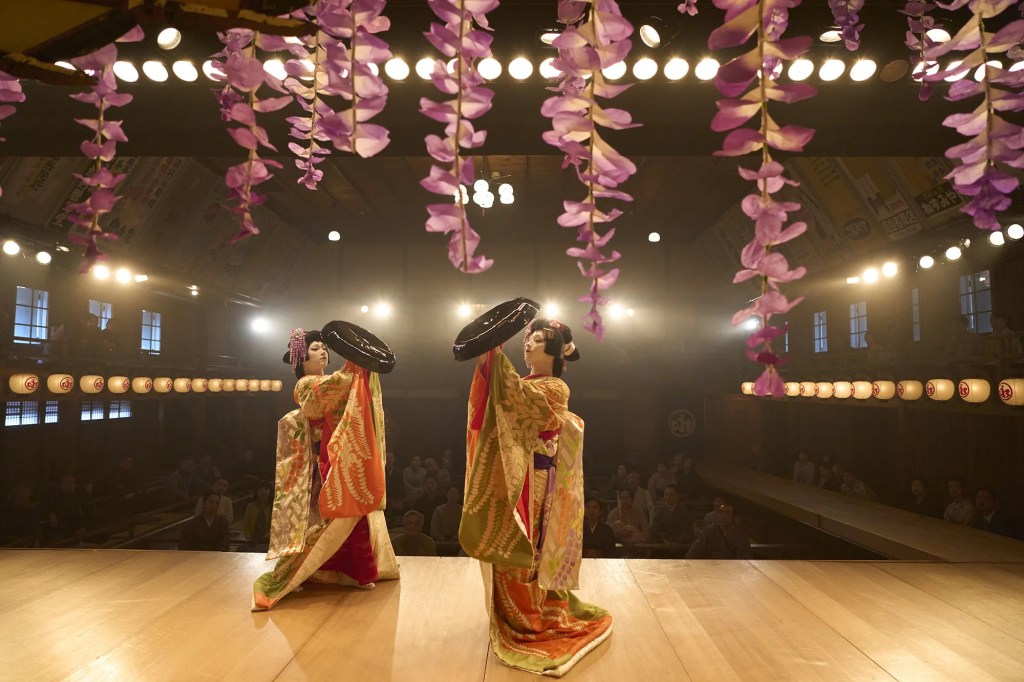
Kokuho (2026)
Kokuho, que significa “Tesoro nacional” en japonés, fue la propuesta de Japón al Oscar a mejor película extranjera y un colosal éxito de taquilla y de crítica en su país de origen que la Academia y la mayoría de los países occidentales han ignorado por completo (hasta el punto de que en España ni siquiera tiene fecha de estreno prevista). Entiendo que a mucha gente no le entusiasmará la idea de una narrativa histórica de tres horas de duración sobre los entresijos del teatro kabuki; yo desde luego la esperaba con ansia desde el mismo momento en que se anunció su estreno en Cannes.
Sabrías que está basada en un libro aunque no te lo dijera, porque es ese tipo de historia generacional que se necesitan ochocientas páginas para contar. Es la vida de Kikuo (Ryo Yoshizawa), el hijo de un jefe yakuza que se convierte en el aprendiz estrella de un prestigioso actor de kabuki (Ken Watanabe), eclipsando al hijo y heredero de este último (Ryusei Yokohama). En un relato más corto esta fórmula bastaría para predecir todo lo que sigue, pero al seguir toda la vida de sus personajes la película se toma el tiempo de explorar todas las facetas de sus diversos temas.
Me gustó especialmente la relación entre los dos hermanastros, por llamarlos de alguna forma: aunque lo más fácil habría sido presentar una rivalidad nacida de los celos, en su lugar nos encontramos con la camaradería de dos jóvenes que han sufrido una dura niñez juntos. Eso no significa que no exista conflicto entre el actor con talento pero sin pedigrí y el actor con pedigrí pero sin tanto talento, sino que dicho conflicto se entremezcla con el concepto de la fraternidad.
Ryo Yoshizawa ofrece una actuación cautivadora y francamente agotadora: baila con pesados trajes, canta mientras desfila con todo tipo de artilugios, demuestra las expresiones tradicionales del kabuki bajo el grueso maquillaje blanco de los personajes femeninos que interpretan… Pero me deslumbraron aún más los actores secundarios, como Watanabe con su dignidad característica, también Soya Kurokawa, cuyo apabullante talento sería todo un descubrimiento si no fuera porque ya lo vimos destacar siendo niño en la genial Monster de Koreeda, y sobre todo Ryusei Yokohama, por la forma en que soslaya todos los clichés del heredero resentido en favor de una profunda melancolía que se refleja incluso mientras lleva a cabo los mismos bailes y carga con los mismos trajes que el protagonista.
Por mucho que me haya gustado, no voy a fingir que las tres horas se pasen rápido: hacia el final hay dos o tres capítulos que básicamente reiteran temas ya tratados, por no hablar de que aunque el kabuki sea un deleite para la vista, a menudo el diálogo operático es tan lento y artificial como para ser desesperante. Lo importante es que el viaje cultural y emocional merece la pena.
 The Film Tower