
My best-case scenario for Across the Spider-Verse, after the eye- and mind-opening spectacle that was the previous movie, was “more of the same”, because I couldn’t imagine how that team (now helmed by Joaquim Dos Santos, Kemp Powers and Justin K. Thompson) could possibly surpass the sheer sense of awe that I felt watching Into the Spider-Verse. There was, instead, the risk that the wonder would wear off, that the novel would become routine.

I’m happy to report that sure enough, they have found a way to not just push, but thrust the medium to new heights once again. From beginning to end (well… we’ll get to that in a bit) I never stopped being amazed at the display of creativity flashing on the screen. The talented artists charged with bringing Miles Morales and an ever-growing cast of spider-people to life were not content with simply recreating the comic-book style of the first movie, full of print matrix and speech bubbles, and have instead branched off into new styles, leaning into the variety of spider-verses that we visit throughout the movie. For example, Gwen’s universe features painterly, almost unfinished colorful backgrounds that change tones gradually depending on the mood of the scene, while counter-culture Spider-Punk exists simultaneously as a newspaper cartoon and a graffiti composite, and Indian Spider-Man Pavitr’s native Mumbattan is all line drawings over splashes of yellows and greens. Despite being aesthetically and thematically coherent, it is possible to see stills from this sequel and tell that they’re not from the previous one.
On the story side, there are more plot threads and characters than either of us have time to get into right now, but I will say that they have found new, interesting directions for the story that manage to build onto the previous chapter without feeling like a retread. There is a new villain, but he functions only as a detonator for a series of conflicts between the heroes and their differing philosophies. My only complaint is that the cameos and side-characters end up weighing this long movie down, especially towards the middle, such that by the time we get to (what feels like) the climax and things are getting interesting, they drop a massive cliffhanger that makes the film feel like half a story that will need to connect to the sequel to get any kind of closure.
This is one of the easiest choices you’ll face at the theater this year: if you felt Into the Spider-Verse’s style was all over the place or the pace too frantic, that has certainly not changed this time around. If you loved its creativity, however, you don’t want to miss the chance to see it taken to the next level.
Spider-Man: Across the Spider-Verse on IMDb

Spider-Man: Cruzando el Multiverso (2023)
Lo más que me atrevía a esperar de Cruzando el Multiverso, tras el espectáculo visual que fue la anterior película, era “más de lo mismo”, porque no me imaginaba que el equipo (ahora dirigido por Joaquim Dos Santos, Kemp Powers y Justin K. Thompson) fuera capaz de superar la fascinación que sentí viendo Un nuevo universo. Existía en su lugar el riesgo de que se hubiera pasado la novedad, de que ahora ya fuera rutina.
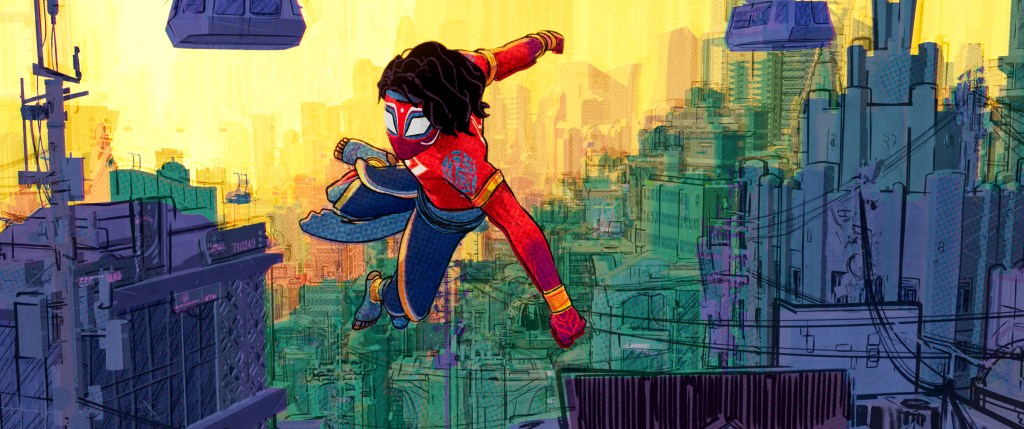
Me alegra confirmar que, efectivamente, han dado con la forma de propulsar el medio de la animación a cotas insospechadas una vez más. De principio a fin (bueno… ya lo hablamos en un rato) nunca dejó de sorprenderme la creatividad que desborda de la pantalla. Los artistas que se han hecho cargo de dar vida a Miles Morales y a un reparto cada vez más poblado de spider-gente no se han contentado con recrear el estilo de la peli anterior, todo matrices de impresión y paneles de cómic, sino que experimentan con estilos nuevos aprovechando la excusa de los distintos universos por los que viajan los protagonistas. Por ejemplo, el universo de Gwen está ilustrado con fondos pintados y casi sin terminar, como dibujos en un cuadro, coloreados con tonos que cambian según el tono de cada escena; Spider-Punk, símbolo de contracultura, existe a la vez como un recorte de periódico y un grafiti, mientras que el Spider-Man indio, Pavitr, vive en una metrópolis llamada Mumbattan con líneas negras y salpicones de colores amarillos y verdes. Aunque se mantenga la coherencia estética y temática, es posible ver capturas de esta peli y saber que no son de la anterior.

En lo que respecta a la historia, ni tú ni yo tenemos tiempo de entrar en todos los hilos argumentales y personajes que hay en juego, pero baste decir que la historia encuentra nuevas e interesantes direcciones en las que progresar sin repetirse. Hay un nuevo villano, aunque funciona más como detonante para una serie de conflictos entre los héroes y sus distintas filosofías. Mi única queja es que los cameos y los personajes secundarios acaban lastrando la narrativa, especialmente en el segundo acto, de tal manera que para cuando llegamos a (lo que parece ser) el clímax y la cosa se pone interesante, nos dejan con un cliffhanger monumental que convierte a este capítulo en media historia a la espera de una secuela.
La decisión va a ser muy fácil. Si viste Un nuevo universo y te pareció que el estilo era confuso o el ritmo demasiado frenético, desde luego eso no ha cambiado. Pero si te entusiasmó su creatividad, entonces no puedes dejar pasar la ocasión de ver cómo ha evolucionado la técnica.
 The Film Tower