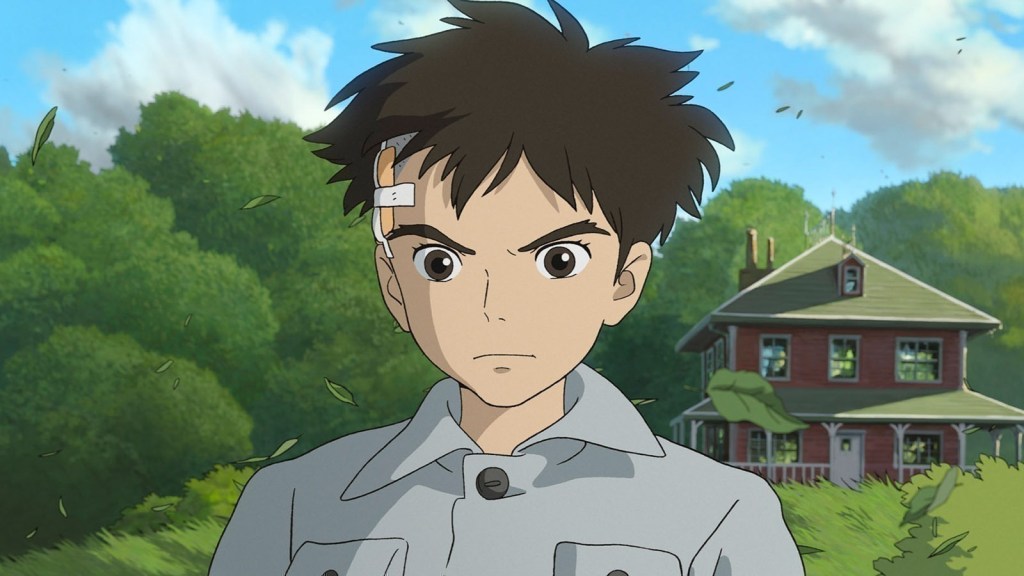
I am in awe of the release strategy for The Boy and the Heron: if you didn’t hear, in preparation for its Japanese release, Studio Ghibli announced a date, a title, and an enigmatic poster, and that’s all anybody knew about Hayao Miyazaki’s latest opus until it came out. No trailers, no ads, no interviews, not even a plot summary was communicated. Any PR firm must have thought this was financial recklessness, but it worked in building anticipation just based on the legendary director’s name. Well, I bought into the anticipation as much as anybody else, but unfortunately I couldn’t quite get into The Boy and the Heron.
Even though there are plenty of trailers now, it still feels somewhat treasonous to divulge anything about the story, but in broad strokes, it follows Mahito, a boy in post-war Japan who moves into the countryside with his dad and the latter’s new wife, and shortly thereafter finds himself transported to a parallel universe full of dangers and wonders alike.
The themes of magic around us, children coming of age, and more will be familiar to anybody who’s seen even one previous Miyazaki movie. Here, they don’t feel as cohesive as in his best work: different plot points appear out of nowhere, are dropped like a ton of bricks when a new one comes along, and may or may not return later on just as abruptly. The worlds of Spirited Away, Princess Mononoke, or even Ponyo, to name a more recent example, feel coherent even when they are surrounded in mystery, whereas Mahito’s fantasy world feels disjointed, even when his companions verbally explain its arbitrary rules.
Character work is similarly underdeveloped: Mahito appears stoic to the point where there seems to be little in terms of conflict in his character, and supporting players like Himi or Aosaki carry an importance to the plot that is not accompanied by depth.
To give credit where it is due, Studio Ghibli’s artistry remains astonishing: even if I didn’t quite like the movie, the craft is undeniable. The backgrounds look hand-painted, the characters show subtle hints of emotion even in their simplistic designs, the concepts and animations are as imaginative as ever. It is a visual spectacle, but ultimately the beauty of its art does not quite make up for its lackluster story and characters.
El chico y la garza (2023)
La estrategia comercial de El chico y la garza es de lo más curiosa: por si no te habías enterado, antes de su estreno en Japón, el Estudio Ghibli anunció un título, una fecha, y un enigmático póster para la última obra de Hayao Miyazaki, y eso fue todo lo que se supo de la peli hasta que llegó a los cines. No hubo ni un tráiler, ni un anuncio, ni una entrevista, ni siquiera una sinopsis. Cualquier agencia publicitaria lo consideraría una locura, pero funcionó y el estreno fue todo un éxito gracias enteramente al nombre del legendario director. Pues bien, yo estaba tan emocionado como el que más, pero por desgracia no terminé de entrar en el mundo de la peli.
Aunque a estas alturas ya hay todo tipo de tráileres, todavía me da reparo divulgar detalles sobre la trama, pero así en líneas generales, la historia trata de Mahito, un niño en el Japón de la posguerra que se va a vivir al campo con su padre y la nueva mujer del mismo, y no tarda en darse de bruces con un universo paralelo rebosante de peligros y maravillas por igual.
La temática de la magia que nos rodea, los niños que se hacen mayores y demás le sonarán a todo aquel que haya visto cualquier película de Miyazaki. En esta ocasión, sin embargo, nunca se termina de solidificar. Las tramas aparecen de repente y se dejan caer somo si nada, para luego regresar o no, igual de abruptamente. Los mundos de El viaje de Chihiro o La princesa Mononoke, o Ponyo en el acantilado por nombrar un ejemplo más reciente, cobran vida y son coherentes por muchos misterios que escondan, mientras que el mundo de fantasía de Mahito parece inconexo, incluso cuando sus acompañantes explican verbalmente sus normas arbitrarias.
Los personajes no se desarrollan mucho mejor: Mahito es un niño estoico hasta el punto de que no parece que tenga mucho conflicto por explorar, y los secundarios como Himi o Aosaki conllevan una importancia para el argumento que no implica profundidad.
Pasando a lo positivo, el apartado artístico del Estudio Ghibli nunca deja de sorprender: aunque la película en sí no me haya gustado mucho, la habilidad de los artistas es incuestionable. Los fondos parecen dibujados a mano, los personajes esbozan emociones sutiles pese a la simpleza de sus diseños, y los conceptos y animaciones son tan refinados como siempre. Es todo un espectáculo visual, pero en última instancia la belleza no compensa la falta de desarrollo de la historia o los personajes.
 The Film Tower