
I am so mad that it took this long to get this movie! The best Godzilla movie in decades, an international success in every measure, and in Spain its entire theatrical strategy was to grace maybe two screens in the entire country for one weekend. A year later, we can finally see it on Netflix.
It is well known that American Godzilla movies are about monsters wrecking cities while Japanese Godzilla movies are anti-war parables, more specifically anti-nuclear bomb parables. Godzilla Minus One (following this inscrutable Japanese numbering style that already raised my eyebrows with Evangelion 3.0+1.0) is sure enough a scathing condemnation of war, but it goes so much deeper than you might expect from any sci-fi blockbuster: it doesn’t simply make unspecified pacifist claims like “war is bad”. It goes on to explain why it is bad and why you should not participate in it by deconstructing the political organisms that cause wars and the tragedies they beget in the regular citizens that suffer the consequences.
The themes start already with the choice of protagonist, Koichi (Ryunosuke Kamiki, an experienced voice actor who also acts onscreen in shows like the quirky Life’s Punchline/Konto ga Hajimaru), a kamikaze pilot who disobeyed his orders to immolate himself at the end of the war. Just by the fact of being a kamikaze pilot who is alive, Koichi is definitionally a deserter, scorned wherever he goes, including initially by his neighbor, Sumiko (Sakura Ando, one of the best actors working today, in jewels like Shoplifters or Monster, which together with this movie earned her the rare honor of earning the Best Actress and Best Supporting Actress Japanese awards in the same ceremony): he was supposed to die, even if his death would have served no purpose, because that was his duty, and now his life itself is a dishonor.
While Koichi tries to rebuild his life among the rubble of post-war Tokyo, putting together a found family in the absence of the family he lost during the bombings, he discovers Godzilla, a giant monster that rises from the ocean to wreak untold destruction upon the city and its inhabitants. Where American Godzilla movies often have paper-thin human characters that serve only as connecting tissue holding monster sequences together, Minus One remains firmly the story of Koichi and an increasing collective of citizens. Godzilla’s attacks, portrayed with impeccable filmmaking as a natural, unstoppable phenomenon more than an evil sentient creature, feel tense first and foremost because we are invested in the well-being of the characters involved.
While the colossal action unfolds on screen, the themes of the story continue to build, as Koichi learns to shed the Imperial Army’s oppressive doctrine of self-sacrificing subservience and make a life of his own; it is an important plot point that the government is too paralyzed by its protocol to be capable of any effective response to disaster (and doesn’t that ring a bell!).
Godzilla Minus One would be a great movie even without the monster; with it, it becomes a fantastic disaster/kaiju movie with a poignant anti-war drama at its heart. Not to be missed!
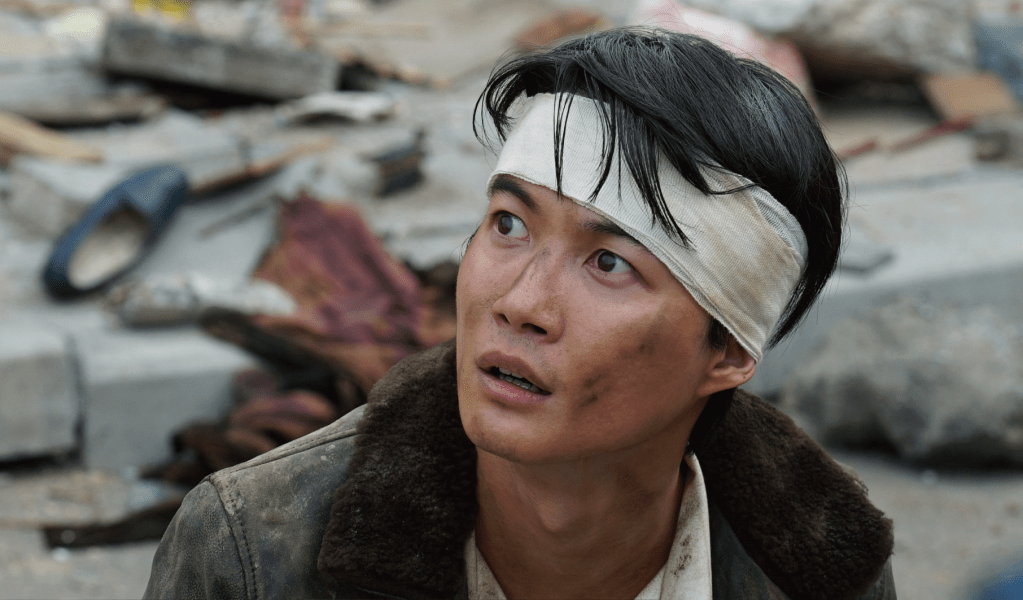
Godzilla Minus One (2024)
¡No me puedo creer que hayamos tardado tanto en recibir esta peli! La mejor película de Godzilla en décadas, un éxito internacional indiscutible, y en España solo agració algo así como dos cines en todo el país durante un único fin de semana. Un año después, por fin llega a Netflix.
Ya sabemos que las pelis de Godzilla americanas tratan de monstruos gigantes que destruyen ciudades, mientras que las japonesas son parábolas antibelicistas en general, anti-bomba atómica en particular (la primera se estrenó en 1954, menos de diez años después del bombardeo nuclear de Hiroshima y Nagasaki). Esta, Godzilla Minus One (un título que sigue un estilo de numeración algo peculiar, que recuerda a Evangelion 3.0+1.0), es sin duda alguna una devastadora crítica de la guerra, pero va mucho más allá de lo que se podría esperar de una película de acción: no se contenta con lugares comunes sobre el pacifismo. No se limita a decir “la guerra está mal”, sino que explica por qué está mal y por qué no hay que participar en ella deconstruyendo los organismos políticos que causan las guerras y las tragedias de los ciudadanos de a pie que sufren las consecuencias.
La temática empieza ya con su protagonista, Koichi (Ryunosuke Kamiki, un experimentado actor de doblaje que también actúa en pantalla en series como la irreverente Life’s Punchline/Konto ga Hajimaru), un piloto kamikaze que desobedece sus órdenes de inmolarse al final de la guerra. El solo hecho de ser un kamikaze que sigue con vida hace de Koichi un desertor a quien todo el mundo desprecia, incluso su vecina, Sumiko (Sakura Ando, una de las mejores actrices en activo, a quien hemos visto en joyas como Shoplifters o Monster, la cual le valió junto a esta el raro honor de recibir el premio a Mejor Actriz y Mejor Actriz Secundaria en Japón en la misma ceremonia). Koichi debió haber muerto, aunque su muerte no hubiera servido para nada, porque era su deber y ahora su vida misma es una vergüenza.
Mientras Koichi trata de reconstruir su vida entre los escombros del Tokio de la posguerra, reuniendo una familia circunstancial para reemplazar la que perdió en los bombardeos, se encuentra con Godzilla, un monstruo gigantesco que se alza de las profundidades del océano para sembrar la destrucción por la ciudad. Mientras que los personajes de las pelis de Godzilla americanas son apenas caricaturas que solo existen para enlazar una secuencia de acción con otra, Minus One nunca deja de ser la historia de Koichi y un colectivo cada vez mayor de conciudadanos. Los ataques de Godzilla, filmados con pericia envidiable por el director Takashi Yamazaki, son un derroche de tensión porque nos preocupa el bienestar de los personajes que corren peligro.
Mientras la acción colosal desborda la pantalla, la temática se sigue desarrollando, a medida que Koichi empieza a liberarse de la doctrina opresora del Ejército Imperial que lo conminaba al sacrificio y aprende el valor de su propia vida; un punto importante del argumento es que el gobierno está demasiado paralizado por el protocolo como para ser capaz de organizar ningún tipo de respuesta al desastre (¡qué familiar resulta!).
Godzilla Minus One sería una gran película incluso sin monstruo, pero con él se convierte en una fantástica peli de kaiju con un potente mensaje antibelicista. ¡No te la pierdas!
 The Film Tower