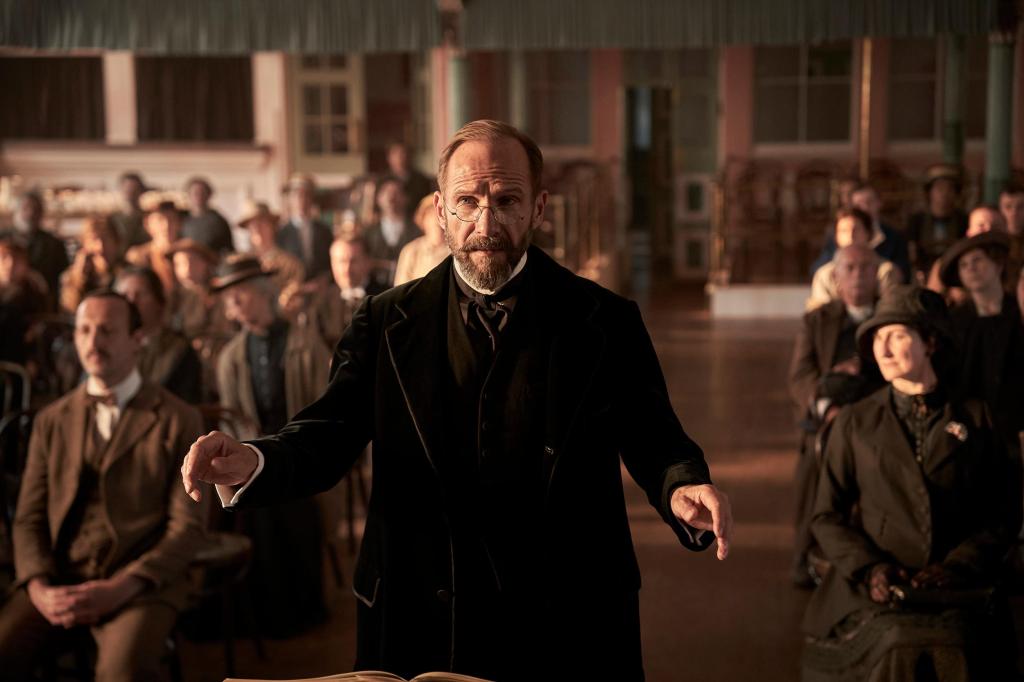
The Choral is the most English movie you can imagine, about a quaint small town of hard working people who come together under Ralph Fiennes’ stern direction to play classical music during the First World War. There are (a few) parts of it that stand out, and others that I find baffling, with the balance coming out on the side of… well, it’s fine.
“We’re going to throw the biggest show this town has ever seen!” is a well tested premise that has served as the basis for many great movies, musicals or otherwise, in part because it comes with a neat, prepackaged structure that is easy to tweak. The stakes are usually clear: we have to win a competition, or we have to make enough money to stop the orphanage from closing, or some other urgent and pressing goal that the characters need to achieve. What is most mystifying about The Choral is that it skips this step entirely, never bothering to come up with any stakes. The town must organize a concert, true, but firstly, the reason for it is that it organizes concerts every once in a while, and it’s just time for another one. Secondly, there is no win condition other than that the concert must take place: there is no number of attendees to gather, no amount of money to earn, no dignitary to impress.
In fact, any and all obstacles that appear are “solved” by the characters immediately capitulating and jettisoning whatever the problem is. The townsfolk (I very nearly called them the village people) object to the choice of music because it’s by a German composer? We drop the German composer and choose a British one instead. There are not enough instruments to make a full orchestra? We’ll just use the ones we’ve got. There are not enough trained singers? We’ll just use the ones we’ve got (yeah, that’s the same one twice). And so on, until the concert takes place in whatever shape it will. The result is that there is never any tension or any jeopardy to the main plot, or really even the secondary ones, like the young lads who get paired with girls early on and then just stay with them throughout.
What did pique my interest is how staunchly anti-war the movie is; it is not a given to fly in the face of British patriotism like that. It is true that the criticism of war stays at a fairly generic level, but I was still impressed that they take every possible opportunity to depict war as a carnage of young people orchestrated by selfish elites who risk nothing from it. The adversary is humanized, sometimes deftly, as in the substory of Fiennes’ character’s secret gay love story with a German officer, others clunkily, as in a terrible line where a pastry chef reckons that if the Germans make good cakes then we must have more in common with them than not.
Sure, Fiennes is great because he always is, and the central piece of music (the real The Dream of Gerontius, by Edward Elgar) is beautiful, even if it must be played poorly at the beginning to get better as we go. But even though it is competently made in the moment to moment, the absolute lack of conflict kills any story momentum it may have.
El coro de Ramsden (2025)
El coro de Ramsden es la peli más inglesa que te puedas imaginar, sobre una bucólica aldea de humilde gente trabajadora que se une bajo la (metafórica) batuta de Ralph Fiennes para tocar música clásica durante la Primera Guerra Mundial. Hay algunos (pocos) elementos notables, otros inexplicables, y en general el resultado es… eh, se deja ver.
“¡Vamos a montar el mayor espectáculo que este pueblo ha visto jamás!” es una premisa bien manida que ha dado lugar a muchas grandes películas, musicales o no, en parte porque viene de fábrica con una estructura que se presta a los retoques. Suele haber algo en juego que es fácil de explicar: tenemos que ganar una competición, o recuadar suficiente dinero para que no nos cierren el orfanato, o algún otro objetivo que es a la vez importante y urgente para los personajes. Lo más chocante de esta peli es que se salta este paso del todo: el pueblo tiene que organizar un concierto, sí, pero en primer lugar la razón es sencillamente que hay conciertos regularmente y ahora toca otro. En segundo lugar, no existe ningún requisito más allá de que el concierto tenga lugar: da igual cuánta gente asista, cuánto dinero se recaude, qué dignatarios asistan o no a la representación.
De hecho, la única forma que tienen los personajes de “resolver” todos los obstáculos que les salen al paso es capitular inmediatamente y renunciar a lo que fuera el problema. ¿Los aldeanos se enfadan porque hemos elegido un compositor alemán? Pues lo cambiamos por uno inglés. ¿Faltan instrumentos para formar una orquesta completa? Nos arreglaremos con los que tenemos. ¿Faltan cantantes para completar un coro? Nos arreglaremos con los que tenemos (es la misma dos veces). Y así hasta que el concierto tenga lugar como se pueda pueda. Como consecuencia, nunca llega a haber la más mínima tensión, ni en la historia principal ni en las tramas secundarias, como los jóvenes que encuentran sus parejas al principio y ya se quedan con ellas sin problemas hasta el final.
Lo que me llama la atención para bien es el rotundo antibelicismo de la película; no es fácil resistir el patriotismo británico de esa manera. Si bien la crítica de la guerra es algo genérica, no deja de ser loable que aproveche cada oportunidad para retratar la guerra como una masacre de jóvenes perpetrada por una élite inmoral que no sufrirá ninguna consecuencia de la misma. Siempre humanizan al adversario, a veces de forma sensible (como la velada historia de amor del personaje de Fiennes con un oficial alemán), otras no tanto (como una línea de diálogo verdaderamente atroz en la que un pastelero propone que los alemanes no serán tan malos si sus pasteles son tan buenos).
Sin duda, Fiennes está genial porque siempre lo está, y la composición central (The Dream of Gerontius, una obra real de Edward Elgar) es hermosa, aunque la toquen mal al principio para ir mejorando después, pero aunque sea una película competente en cada escena, la falta total de conflicto deja el conjunto carente de casi todo interés.

