The bar left by the incredible Godzilla Minus One was impossible to clear, and sure enough Godzilla Minus Zero failed to clear it. It’s still an effective kaiju epic, to be sure: the action is spectacular, the effects impressive, and it has hints of brilliance here and there that simultaneously remind you of the genius of the previous movie and draw attention to the ways in which this one falls short.
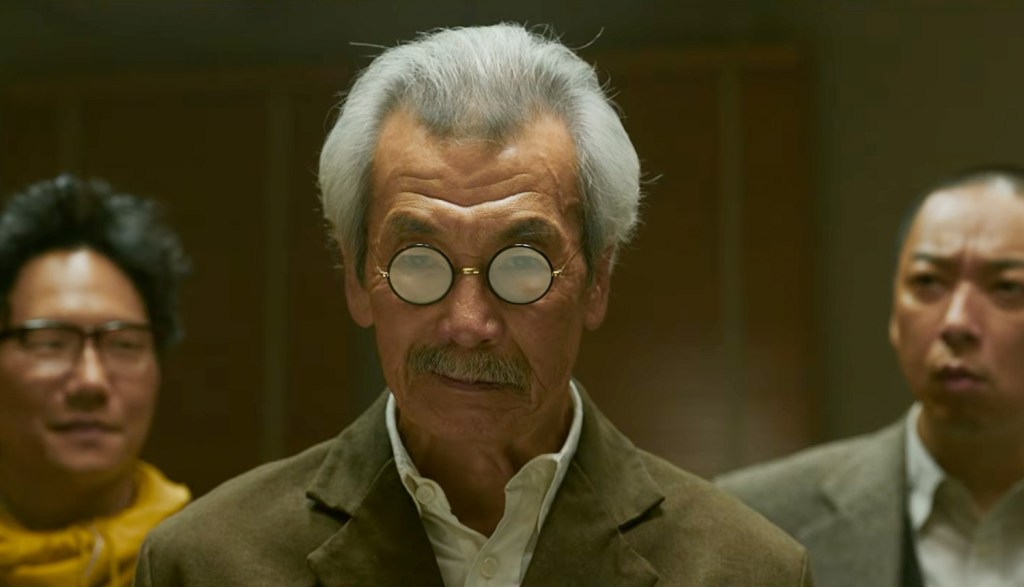
The gang is all back: Shiki (Ryunosuke Kamiki) and Noriko (Minami Hamabe) are trying to live their lives with their adopted child, the extremely annoying Akiko, to the best of their traumatized ability, when an alien monster descends upon Japan to wreak havoc: it’s the iconic Ghidorah, the golden three-headed dragon that has been Godzilla’s archnemesis so many times before. The delightful Dr. Noda (Hidetaka Yoshioka, again sporting his trademark mane of gray curls) is in charge of responding to this new threat, having become this movie’s closest thing to a protagonist, and comes along with two new recruits: Aoyama (Masami Nagasawa), a meteorologist who had been dismissed as an irrelevant weatherwoman before Noda paid attention to her reasoning, and Murakami (Min Tanaka), a scientist who survived the atomic bomb in Hiroshima only to face the same kind of destruction again. Murakami is my favorite part of this whole movie, firstly because Min Tanaka is an incredible actor who can inject so much gravitas into a complex role, but also because the character is a conduit for Minus Zero‘s most interesting themes: if Godzilla was previously an allegory to the use of the atomic bomb, Murakami and his research into Ghidorah are used to explore the United States’ imperialistic wars, from the Cold War (which is just getting started at the time this story takes place) until today. It’s such a masterstroke to make Ghidorah’s theme the opening of Wagner’s Ride of the Valkyries, knowing the war associations it instantly evokes without having to say a word.
All of that said, Minus One was a triumph because it was an excellent blend of character, theme, and plot, in that order, but Minus Zero is mostly just plot. The themes are not nonexistent: there’s the aforementioned critique of American destruction, exemplified in a striking dream sequence that many Americans have objected to but which is deployed to great effect, and on a more abstract side the conflict between Noda and Murakami explores the ethics of arms races and retaliation, but not to satisfying depths. The characters, especially Shiki, more or less had all their development in the first movie and are now standing by until required to act by the plot, absent any motivation of their own; the women in the cast are the worst served of all, with Aoyama being the only one with something to do, Noriko reduced to human bait, and Sakura Ando being a glorified extra is the most baffling of all: imagine having an actor of her caliber in your movie and only using her as a babysitter of the most annoying orphan in the world!
Perhaps I would have been kinder on this movie if I didn’t have Minus One to compare it to, but as it is I kept thinking what a missed opportunity it was. You will still enjoy the thrill of the action sequences, but don’t expect the same level of emotional investment.
Godzilla Minus Zero (2026)
La increíble Godzilla Minus One dejó el listón tan alto que es imposible de superar, y efectivamente Minus Zero no lo ha superado. No deja de ser una buena película de monstruos, que quede claro: la acción es espectacular y los efectos, impresionantes, por no hablar de algunos momentos geniales aquí y allá que nos recuerdan la genialidad de la anterior película.
Todos los personajes siguen ahí: Shiki (Ryunosuke Kamiki) y Noriko (Minami Hamabe) hacen lo que pueden para vivir con normalidad con su hija adoptiva, la extremadamente insufrible Akiko, a pesar de que los tres acarrean suficientes traumas como para un regimiento de terapeutas, cuando Japón se ve asolado por un monstruo alienígena: el icónico Ghidorah, un dragón dorado de tres cabezas que ha sido el archienemigo de Godzilla ya en muchas pelis. El entrañable Dr. Noda (Hidetaka Yoshioka, una vez más deleitándonos con su canosa melena digna de un anuncio de champú) es el responsable de hacer frente a esta amenaza, habiéndose convertido en lo más parecido que tiene esta historia a un protagonista, y para ello nos presenta a dos nuevos reclutas: Aoyama (Masami Nagasawa), una meteoróloga a la que nadie hacía caso hasta que Noda empezó a prestarle atención, y Murakami (Min Tanaka), un científico que sobrevivió a la bomba atómica de Hiroshima solo para enfrentarse de nuevo a la misma destrucción en Tokio. Murakami es lo mejor de toda la película, en parte porque Min Tanaka es un actor de primero capaz de aportar profundidad a cualquier papel, pero también porque su personaje es el medio por el cual Minus Zero explora los temas más interesantes: si Godzilla es una alegoría del uso de la bomba atómica, Murakami y su investigación de Ghidorah sirven para hablar de las guerras imperialistas de los Estados Unidos, desde la Guerra Fría (que acaba de empezar en la época en la que transcurre la historia) hasta hoy en día. Es una idea genial que la cuña musical de Ghidorah sea el comienzo de la Cabalgata de las Valquirias de Wagner, a sabiendas de las connotaciones bélicas que evoca al instante sin necesidad de decir palabra.
Dicho todo esto, Minus One fue un triunfo gracias a su perfecta mezcla de personajes, temática y argumento, en ese orden, mientras que Minus Zero es solo argumento. No es que la temática no exista: está la crítica de la destrucción estadounidense ya mencionada, ilustrada por una secuencia que muchos americanos han criticado pero que es efectiva como pocas, y en el lado más abstracto está el enfrentamiento entre Noda y Murakami sobre la carrera armamentística y la ética de la venganza, pero se quedan en la superficie. Los personajes, especialmente Shiki, tuvieron su desarrollo en la primera peli y ahora solo responden a las necesidades del argumento. Las peores paradas son las mujeres del reparto: Aoyama es la única que tiene algo que hacer, Noriko apenas sirve de cebo humano, y lo peor de todo es que Sakura Ando es poco más que una extra: ¡imagina tener una actriz de semejante calibre en tu peli y no darle nada que hacer más que cuidar de la huérfana más pesada del mundo!
Seguramente me habría gustado más si no tuviera Minus One para compararla, pero se queda en una oportunidad perdida. Vela por las secuencias de acción, pero no esperes el mismo nivel de emoción.

