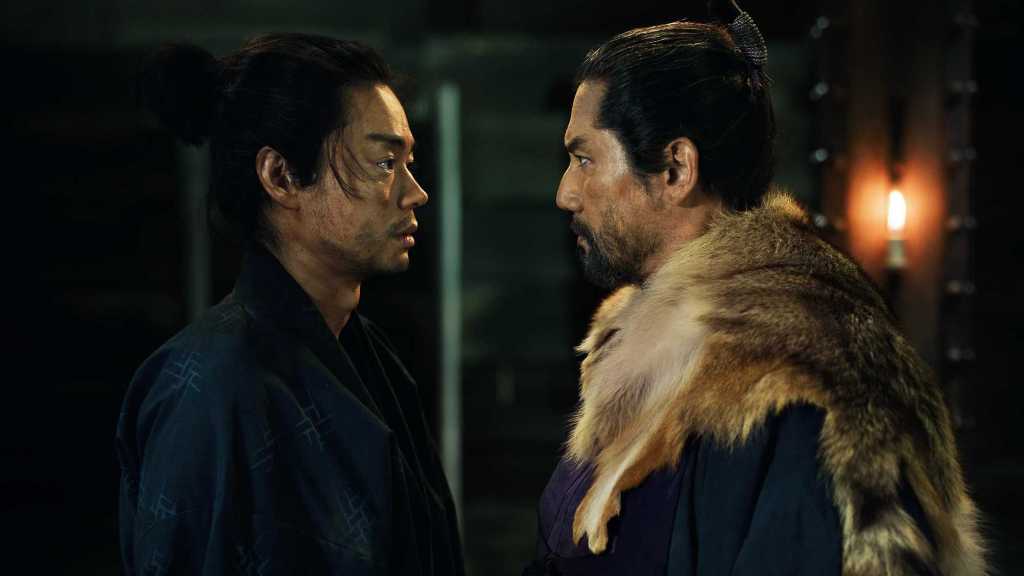
Is it too facile to compare Kiyoshi Kurosawa with his iconic namesake? It’s not just that he is a visionary director; there is something about his latest work, The Samurai and the Prisoner, that evokes a classical, perhaps theatrical atmosphere, all in long, open shots -there are almost no close-ups in this nearly three hour movie- that make you feel like you’re in the audience watching a stage play.
Everything I’d read about the story made it sound like a whodunit, about feudal lord Murashige (Masahiro Motoki) enlisting the help of his imprisoned rival, Kanbei (Masaki Suda, who was Kurosawa’s previous protagonist in the excellent Cloud), to solve a mysterious murder. This is strictly speaking true, in fact there are three different cases for them to solve that serve as the three main acts in the sprawling story of the movie, but in reality each mystery is barely a structural thread underpinning the real story, adapted from a novel by Honobu Yonezawa, which deals mostly with the real historical event of the long siege of Arioka Castle by the forces of Nobunaga Oda, and especially the figure of Murashige as a feudal lord who was too merciful for the rigorous demands of the bushido code of honor.
The film is formally austere, one could say dry: the lack of close-ups, score, or any visual flourishes at all, seem designed to keep the viewer at bay. No modern excuses are offered for the arcane ethical stances of the various characters, who all behave according to their time’s understanding of life and the world, even when they disagree with it. Still, I was absorbed from beginning to end: the castle (which provides the film its Japanese title, “Kokurojo” or “Black Prison Castle”) feels real and lived in, and Murashige’s philosophical quandaries meet real implications that put them to the test. My fandom of Masaki Suda is well documented, for his work in movies as well as TV shows; Motoki is also a nuanced performer, who manages to bridge the distance Kurosawa builds between us with the indecision he hides beneath a dignified persona.
The Samurai and the Prisoner is not the crowd pleaser I expected from the title or the premise, but then again you probably have a clear idea of whether a three hour period drama on the ethics of feudal ruling under siege is for you or not. It is certainly for me!
El samurái y el prisionero (2026)
¿Es demasiado obvio comparar a Kiyoshi Kurosawa con el icónico director del mismo apellido? No es solo porque sea un visionario con una larga e ilustre carrera; su última obra, El samurái y el prisionero, tiene un algo que evoca una ambientación clásica, casi teatral, repleta de planos largos y abiertos (prácticamente no hay un primer plano en casi tres horas de duración) que dan la sensación de asistir a una obra de teatro.
Todo lo que había leído acerca de la historia me hizo pensar que se trataba de un whodunit, acerca de un señor feudal llamado Murashige (Masahiro Motoki) que pide ayuda al rival al que ha hecho prisionero, Kanbei (Masaki Suda, el anterior protagonista de Kurosawa en la excelente Cloud) para resolver un misterioso asesinato. Todo ello es técnicamente cierto -de hecho hay tres casos distintos que deben resolver, uno por cada acto- pero en realidad cada misterio es apenas un conducto para la verdadera historia, adaptada de una novela de Honobu Yonezawa, que trata principalmente sobre el acontecimiento histórico real del largo asedio del castillo de Arioka a manos de Nobunaga Oda, y más concretamente sobre la figura de Murashige como un señor feudal demasiado compasivo para las estrictas exigencias del código de honor de los samuráis.
La película es formalmente austera, por no decir seca: Kurosawa abandona los primeros planos, la banda sonora, y cualquier adorno estético en aparente afán de marcar una distancia con el espectador. No ofrece ninguna excusa moderna para justificar la ética del Japón del siglo XVI, cuyos personajes se rigen todos por la moralidad despiadada que imperaba en aquel lugar y en aquella época, incluso cuando estaban en desacuerdo. Aun y todo, a mí me cautivó desde el principio: el castillo (que da al filme su título japonés original, “Kokurojo” o “El castillo de la prisión negra”) se hace real e imponente, y los conflictos filosóficos de Murashige se enfrentan a implicaciones reales que ponen a prueba sus principios. Hace tiempo que me he declarado fan de Masaki Suda, tanto por su trabajo en cine como en series de televisión; Motoki también es un intérprete delicado, capaz de salvar con la indecisión que oculta tras una máscara de dignidad la distancia que Kurosawa pone entre la cámara y él.
El samurái y el prisionero no es el espectáculo accesible que pensaba al leer la sinopsis, pero a estas alturas ya te habrás hecho a la idea de si el drama de época de tres horas sobre la ética del feudalismo bajo asedio es para ti o no. ¡Desde luego es para mí!

